Obara Sand in Game of Thrones: Dorne’s Deadliest Warrior
Complete Character Guide — Origins, Story Arc, Weapons, Death & Legacy
In a kingdom known for passion, politics, and poison, Obara Sand stands apart. Where her sisters work in shadow — whips and daggers and slow-acting venoms — Obara comes at you straight on, with a spear in her hand and nothing to prove to anyone. She is the eldest of the Sand Snakes, the illegitimate daughters of Prince Oberyn Martell, and the most physically formidable of the three.
Played by New Zealand actress Keisha Castle-Hughes — best known for her Academy Award-nominated role in Whale Rider — Obara Sand appears in Game of Thrones Seasons 5 through 7. She’s a product of Dorne’s unique culture: a place where women fight, bastards are acknowledged, and revenge is considered not just acceptable but obligatory.
Her story is brief but brutal — a compressed arc that reflects both the ambitions and the frustrations of Game of Thrones’ Dornish storyline. This guide covers everything: her origins, her role in the Sand Snake revenge plot, her key relationships, her death, and what she represents in the broader world of Westeros. You can explore Dorne’s geography and lore in detail on our interactive map.
Who Is Obara Sand in Game of Thrones?
Obara Sand is a bastard-born warrior from Dorne, the southernmost of the Seven Kingdoms. Dorne operates by different rules from the rest of Westeros — bastards carry the surname “Sand” rather than being hidden away, women can inherit titles and lead armies, and the culture values passion and personal loyalty over cold political calculation.
She is the daughter of Prince Oberyn Martell — the Red Viper of Dorne — and an Oldtown prostitute whose name is never given in the show. Oberyn’s choice to take Obara from her mother and raise her himself is one of the defining acts of her backstory. He offered her a choice as a child: stay with her weeping mother, or pick up a spear and come with him. She chose the spear. She never looked back.

That story — told in a single speech in Season 5 — does more for Obara’s character than most of her screen time. It tells you everything: she was shaped by a choice between softness and strength, and she has never questioned that choice. There’s no sentimentality in her. No room for it.
Key Facts About Obara Sand
- Full name: Obara Sand (bastard surname of Dorne)
- Father: Prince Oberyn Martell, the Red Viper of Dorne
- Mother: An unnamed prostitute from Oldtown
- Portrayed by: Keisha Castle-Hughes (New Zealand actress, Whale Rider)
- Season appearances: Seasons 5, 6, and 7
- Weapons: Spear and round shield
- Allegiance: House Martell, then Ellaria Sand, then Daenerys Targaryen
- Death: Killed by Euron Greyjoy, Season 7, Episode 2
Obara Sand’s Complete Story Arc — Season by Season
Obara’s arc in Game of Thrones spans three seasons and is tightly bound to the Sand Snakes’ collective revenge mission. Here’s how her story unfolds:
Obara Sand’s Core Character Traits
Obara is the most straightforward of the Sand Snakes, and that directness is both her defining quality and her limitation as a character. She operates without pretense — what you see is exactly what you get:
Unyielding Aggression
Obara doesn’t stalk her prey or wait for the right moment. She comes forward, spear raised, and makes the fight happen on her terms. Her default mode is offense.
Absolute Loyalty
Her loyalty is fierce and unconditional — first to her father’s memory, then to Ellaria Sand’s cause. She doesn’t question the mission. She executes it.
Contempt for Weakness
Obara has no patience for hesitation, diplomacy, or sentiment. Prince Doran’s cautious approach infuriates her. She sees restraint as cowardice dressed up as wisdom.
Physical Dominance
Among the Sand Snakes, Obara is the brute force option. Her spear work is expert-level, and she’s shown dispatching trained soldiers with efficiency and economy of movement.
Obara Sand’s Weapons and Fighting Style
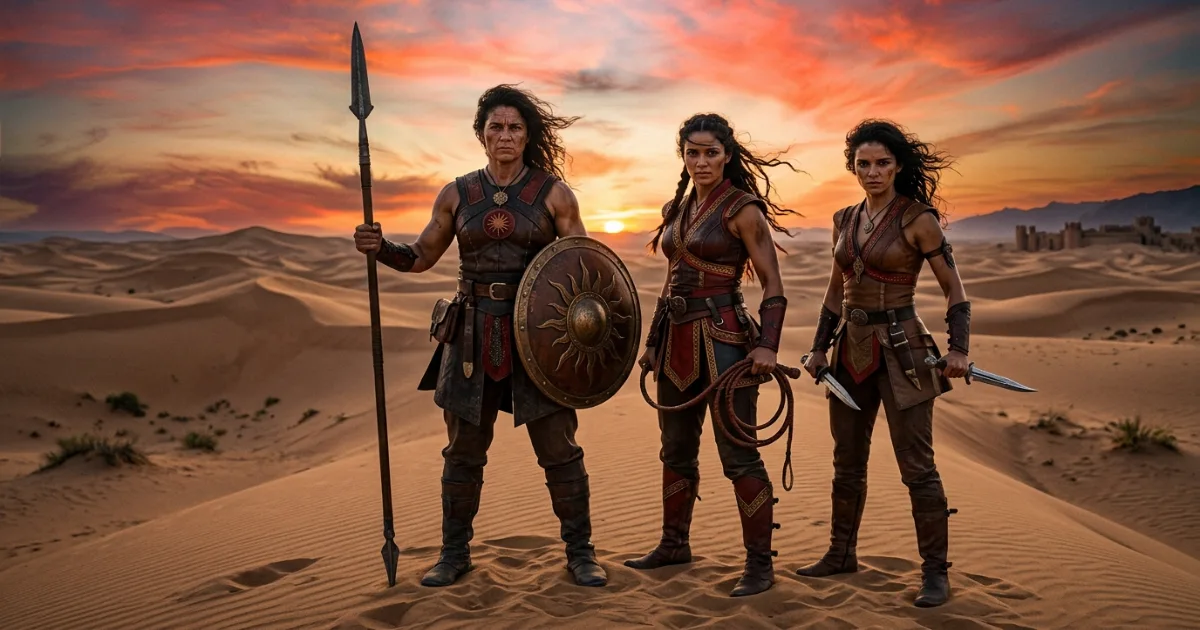
One of the most immediately distinctive things about the Sand Snakes is how their weapons reflect their personalities. Nymeria uses a whip — control, reach, entanglement. Tyene uses daggers and poison — intimacy, deception, close work. Obara uses a spear and a round shield — direct, powerful, no-nonsense.
The spear is historically associated with common soldiers and disciplined armies rather than noble swordplay. That Obara chooses it says something deliberate: she isn’t performing aristocratic combat. She’s fighting to win, practically and efficiently. Her technique combines reach — keeping opponents at distance — with a solid shield wall that makes her difficult to flank. She fights like someone trained for real battle rather than tournament glory.
Her kill of Areo Hotah in Season 6 — a single spear throw to the back — is emblematic of her approach. No drama, no ceremony. The threat is identified. The threat is eliminated. Move on.
| Sand Snake | Weapon | Fighting Style | Personality Reflection |
|---|---|---|---|
| Obara Sand | Spear & Shield | Aggressive, direct, front-on | Blunt, loyal, contemptuous of subtlety |
| Nymeria Sand | Bullwhip | Controlling, ranged, entanglement | Clever, calculating, politically minded |
| Tyene Sand | Daggers & Poison | Intimate, deceptive, close-quarters | Seductive, unpredictable, playfully dangerous |
Obara Sand’s Key Relationships
Obara and Oberyn Martell
Oberyn Martell is the gravitational center of Obara’s entire existence, even though he dies before she appears on screen. His death at the hands of Gregor Clegane — arranged by Cersei Lannister — is the wound that drives everything Obara does in the series. Her grief isn’t passive. It doesn’t make her sad. It makes her dangerous. Read our full guide to Oberyn Martell to understand the man whose death set all of this in motion.
Obara and Ellaria Sand
Ellaria is Oberyn’s paramour and the closest thing the Sand Snakes have to a commanding officer. Obara follows her without question — their goals align perfectly. Ellaria wants revenge and war; Obara wants exactly the same things. There’s no tension between them, no negotiation. That shared certainty is what makes their alliance so effective — and what makes their collective downfall so swift when Euron hits them before they’re ready.
Obara and Her Sisters — Nymeria and Tyene
The three Sand Snakes function as a unit rather than as fully individuated characters in the show — which is one of the criticisms fans level at the Dorne storyline. Obara is the muscle, Nymeria the brain, Tyene the wildcard. Together they’re formidable. Separately, they’re each more limited than they should be. Their sisterhood is genuine but never deeply explored on screen.
Obara and Euron Greyjoy
Their relationship is limited to a single combat, but it’s defining for both characters. Euron’s defeat of Obara — one of Westeros’s most dangerous fighters — establishes him immediately as a serious physical threat, not just a political schemer. He doesn’t just kill her. He turns her own weapon against her as a trophy and a message. It’s a calculated act of brutality that tells Daenerys exactly who she’s dealing with. Explore Euron Greyjoy’s complete arc on our site.
Obara Sand and Dorne — What She Represents
Dorne is unlike any other region in Westeros. It was never conquered by the Targaryens through dragonfire — it joined the Seven Kingdoms through marriage, on its own terms. Its laws permit women to inherit. Its culture is openly sensual and unapologetically passionate. And its people have a long, specific memory for grievances.
Obara embodies the most aggressive expression of Dornish identity. She’s not interested in the careful diplomacy of Prince Doran, who understood that Dorne — small and isolated — would lose a direct war with the Lannisters. She wants the fight, regardless of whether Dorne can win it. That tension between Doran’s strategic patience and the Sand Snakes’ furious need for action is the central conflict of the Dornish storyline — and it’s one the show handles with more bluntness than depth.
Obara represents what happens when that fierce independence tips into recklessness. She and her sisters remove the one person — Doran — who understood that revenge without strategy is just a faster way to lose. The Sand Snakes’ coup feels righteous in the moment. In practice, it leaves Dorne without leadership and walks its most powerful warriors straight into Euron Greyjoy’s ambush.
Obara Sand’s Death — What It Means for the Story
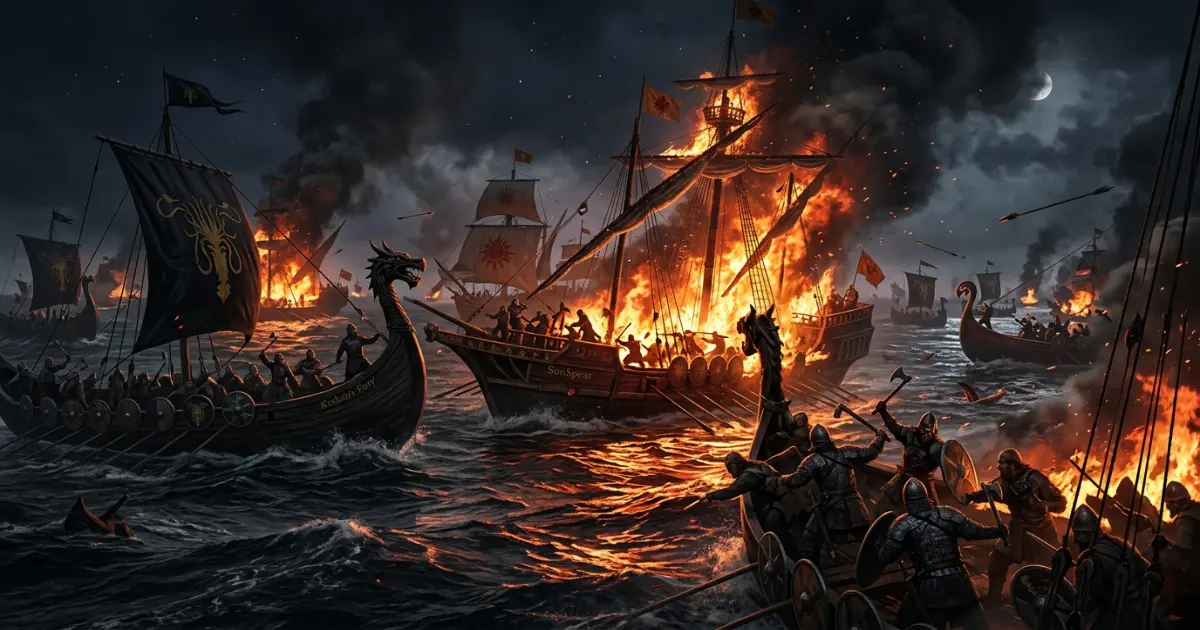
Obara Sand is killed in Season 7, Episode 2 — “Stormborn” — during Euron Greyjoy’s surprise naval assault on the Greyjoy fleet. It’s a night battle on a burning ship, all chaos and screaming and close-quarters violence. Euron carves through everyone in his path, and when he reaches Obara, the fight is real but brief.
What makes her death narratively significant isn’t the combat itself — it’s what Euron does after. He hangs her body from the ship’s prow with her own spear driven through her. It’s a war trophy. A display. A message to Daenerys Targaryen that says: your allies are vulnerable, your fleet is fragile, and I can reach you anywhere.
Her death also closes the Dornish storyline with something close to finality. With Ellaria captured and the Sand Snakes dead, Dorne effectively disappears from the narrative in the show’s final seasons — a storyline that began with genuine promise and ended with most of its characters dying on a boat before they could do much of anything.
Obara Sand’s Legacy and Fan Reception
Fan reception to Obara Sand — and the Sand Snakes generally — is complicated and worth addressing directly. The character has real potential on the page: a warrior daughter of one of the show’s most beloved characters, shaped by grief and fury, fighting with a weapon as blunt and honest as she is. That premise works.
What didn’t fully work, for many viewers, was the execution of the Dorne storyline itself. The Sand Snakes’ scenes in Seasons 5 and 6 felt rushed — too much plot, not enough time to breathe, character moments compressed into single speeches rather than developed across episodes. Obara in particular suffers from being the most defined by her weapon and the least defined by her interior life.
Even so, Keisha Castle-Hughes gives Obara a physicality and intensity that makes every scene she’s in feel credible. She looks like someone who has been training with a spear since childhood. She moves like a fighter. And the moment in Season 5 where she recounts Oberyn’s offer — weeping mother or spear — is the kind of compressed backstory that lands because the actor sells it completely.
Obara Sand deserved more time. The world of Game of Thrones is richer for having her in it, even briefly.
Frequently Asked Questions About Obara Sand
Obara Sand is the eldest of the Sand Snakes — the illegitimate daughters of Prince Oberyn Martell of Dorne. A fierce spear-wielding warrior, she joins Ellaria Sand’s revenge plot against the Lannisters following Oberyn’s death. She later allies with Daenerys Targaryen and is killed by Euron Greyjoy in Season 7. She is portrayed by New Zealand actress Keisha Castle-Hughes.
Obara Sand fights with a spear and a round shield — a direct, aggressive combat style that reflects her personality. Unlike her sister Nymeria (whip) or Tyene (daggers and poison), Obara favors brute force and front-on confrontation. Her most memorable combat moment is killing Areo Hotah with a single spear throw in Season 6, and her final battle against Euron Greyjoy in Season 7.
Obara is killed by Euron Greyjoy during his night assault on the Greyjoy fleet in Season 7, Episode 2 (“Stormborn”). Euron defeats her in direct combat and hangs her body from the prow of his ship using her own spear — a deliberate act of desecration designed to send a message to Daenerys Targaryen about the cost of opposing him.
Obara Sand is played by Keisha Castle-Hughes, a New Zealand actress who received an Academy Award nomination for Best Actress at age 13 for her role in the 2002 film Whale Rider — making her one of the youngest nominees in the category’s history. She has also appeared in Star Wars: Revenge of the Sith as one of Padmé Amidala’s handmaidens.
Obara is Oberyn’s eldest illegitimate daughter, born to an Oldtown prostitute. Oberyn took her from her mother as a child and gave her a choice: the life of a weeping woman, or a spear. She chose the spear. He trained her as a warrior. His brutal death at the hands of Gregor Clegane in Season 4 — arranged by Cersei Lannister — becomes the driving force of Obara’s entire arc in the series.
Yes. Obara Sand appears in George R.R. Martin’s A Song of Ice and Fire novels, most prominently in A Feast for Crows. Her book counterpart is more fully developed than in the show — she has a richer interior life, more political involvement, and a deeper exploration of her complicated feelings about her father and her heritage. The show condensed and simplified her significantly.
The Bottom Line on Obara Sand
Obara Sand is a character who burns bright and brief. She arrives fully formed — a fighter defined by a single childhood choice her father forced her to make — and exits before the show has time to complicate that definition. What we get is lean and honest: a woman who chose the spear over softness, who followed her grief into action, and who died fighting rather than fleeing.
The Dorne storyline is one of Game of Thrones’ most discussed missteps, but Obara herself is not the problem. She’s exactly who she was always going to be. The show just didn’t give her enough room to be it fully. In the books, that room exists — and if you want to know the complete version of Obara Sand, that’s where to find her.
Explore the world she came from on our complete Dorne location guide. Read our full character breakdowns for Oberyn Martell, Ellaria Sand, and Euron Greyjoy, or browse the complete Game of Thrones character guide on Maps of Thrones.